



TheGrint HQ

6 minutes
Updated
October 30, 2026
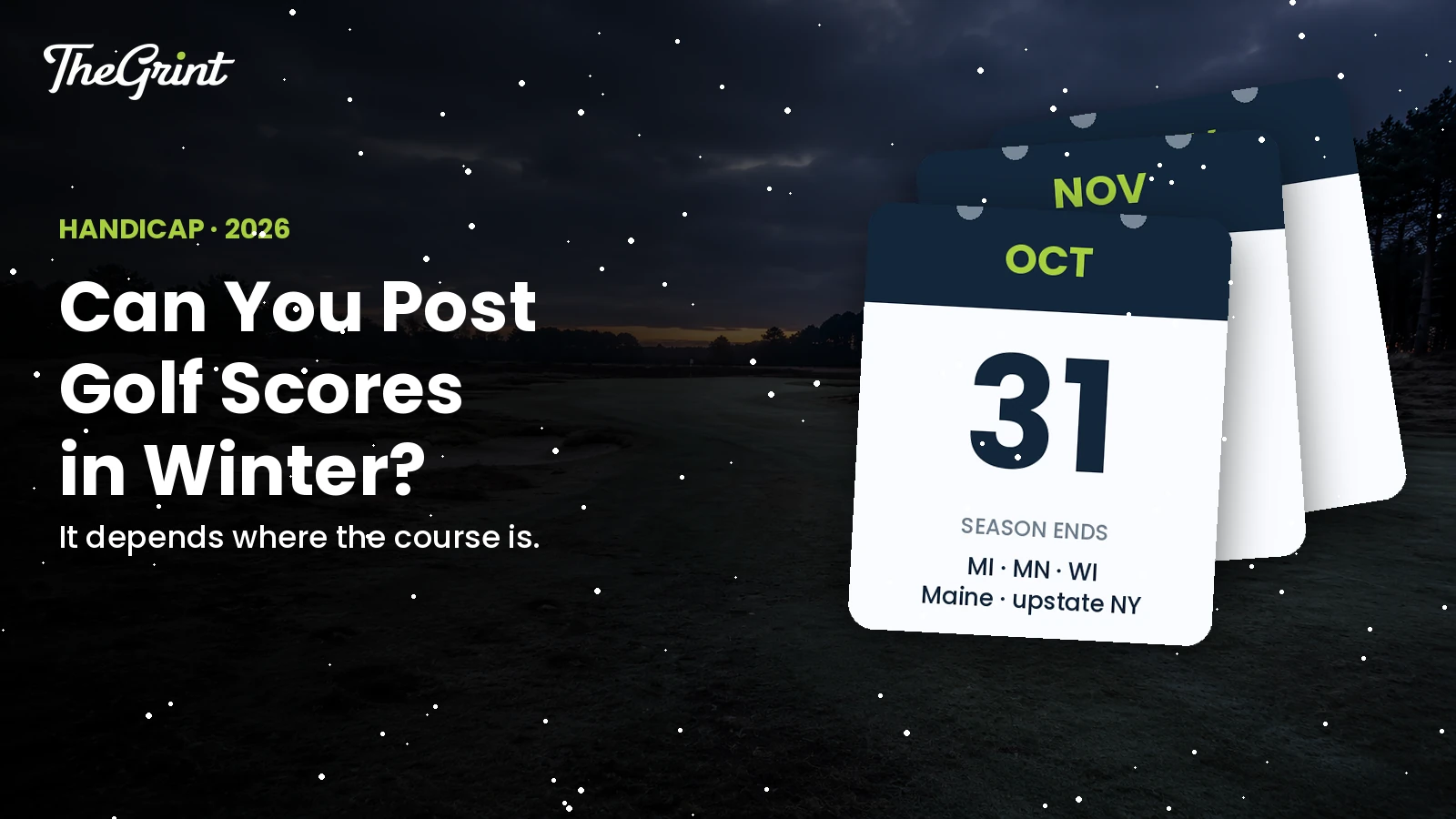
Whether you can post a golf score in winter depends on where the course is, not where you live. If the course is in its inactive season, the score is not acceptable for your Handicap Index®. If it's in an active or year-round season, the score counts. In 2026, many northern seasons end October 31 or in mid-November.
This guide explains what the inactive season is, lists the 2026 active-season dates for the main seasonal states, and covers the question snowbirds ask every year: what happens to a round in Florida or Arizona in January. It also shows how TheGrint marks off-season rounds in your scorecards list.
If you're planning a winter golf trip, TheGrint's free golf course directory has scorecards and golfer ratings for courses in every year-round state.
The inactive season is the part of the year when scores played at courses in a given area are not acceptable for handicap purposes. The Allied Golf Association (AGA) with jurisdiction over that area sets the dates, and some areas have no inactive season at all.
It exists because of how courses are rated. The Course Rating™ and Slope Rating™ for each set of tees assume normal playing conditions. In colder places, winter brings frozen ground, temporary greens and tees, and limited maintenance, so a course can play very differently from the way it was rated. Leaving those rounds out keeps a Handicap Index from being distorted by conditions instead of by how you played.
The active season ends on October 31 in several northern states and in mid-to-late November in many others. These are the published active-season dates for common seasonal areas on the USGA® schedule, checked on October 27, 2026:
| State or area | Association | Active season (scores can be posted) |
|---|---|---|
| Michigan | Golf Association of Michigan | April 1 – October 31 |
| Minnesota | Minnesota Golf Association | April 1 – October 31 |
| Wisconsin | Wisconsin State Golf Association | April 1 – October 31 |
| New York (upstate) | New York State Golf Association | April 15 – October 31 |
| Maine | Maine Golf | April 15 – October 31 |
| Colorado | Colorado Golf Association | March 15 – November 15 |
| Illinois (Chicago area) | Chicago District Golf Association | March 15 – November 14 |
| New Jersey | New Jersey Golf | April 1 – November 14 |
| New York (metro) | Metropolitan Golf Association | April 1 – November 14 |
| Massachusetts | Mass Golf | April 1 – November 14 |
| Pennsylvania | GAP and Western Pennsylvania Golf Association | April 1 – November 14 |
| Ohio (Ohio Golf Association areas) | Ohio Golf Association | March 15 – November 30 |
| Ohio (Cleveland area) | Northern Ohio Golf Association | April 1 – November 14 |
| Maryland | Maryland State Golf Association | March 15 – November 30 |
| Washington | Washington Golf | March 1 – November 14 |
Source: USGA Handicap Active and Inactive Season Schedule. Some states are split by region or by association, such as New York, Ohio, northern and southern Nevada, and northern and southern Utah. Dates can change, so check the schedule or your AGA before you post.
States on the schedule as year-round include Alabama, Arizona, Arkansas, California, Florida, Georgia, Hawaii, Louisiana, Mississippi, New Mexico, North Carolina, Oklahoma, South Carolina, Tennessee, Texas and Virginia, plus southern Nevada and southern Utah.
Yes. If you play a course that is in an active or year-round season, the score is acceptable and should be posted, even if your home club is in its inactive season. In an example from the USGA, a golfer from New York who plays in Florida in January has to post that round, and it counts toward the Handicap Index.
For more detail, see the USGA articles on the inactive posting season and on posting away scores as a snowbird.
A round played at a course in its inactive season is not posted to your scoring record for handicap purposes, so it doesn't change your Handicap Index. You can still keep score and track the round for yourself.
On TheGrint, if you have a linked or official Handicap ID, a round played at a course in its inactive season is marked with an O, for Off-Season, in your scorecards list. It's applied automatically from the governing association's season. The other letters in that list, such as A for Away and T for Tournament, are explained in what the letters on your scorecards list mean.
The USGA also announced in October 2026 that a forthcoming update to the GHIN® app will let golfers in seasonal areas save off-season scores for personal tracking, even when their area isn't in an active posting window.
The off-season is a good time to look at what your scores say and plan the next season, even if you play less.
You can post a winter score if the course where you played is in an active or year-round season on that date. If the course is in its inactive season, the score is not acceptable for handicap purposes. The rule follows the location of the course, not your home state or home club.
It depends on the area. On the 2026 USGA schedule, the active season ends on October 31 in Michigan, Minnesota, Wisconsin, Maine and upstate New York, and on November 14 or 15 in places such as New Jersey, Massachusetts, Colorado and the Chicago area. Year-round states have no inactive season.
No. Your Handicap Index doesn't reset or turn off during the inactive season. It simply doesn't change from local rounds, because those scores aren't posted. It can still change if you post an acceptable score from a course in an active or year-round area.
Yes. Florida is a year-round state on the USGA schedule, so an acceptable round there in January counts toward your Handicap Index, even if your home club is in its inactive season. Post it as an away score, with the A score type, like any round away from your home course.
For golfers with a linked or official Handicap ID, TheGrint marks a round with an O, for Off-Season, when the course where you played is in its inactive season. The marker is applied automatically from the governing association's season, and you can still keep score for your own tracking.
Keep score in TheGrint all year, with free GPS distances and stats, and let the off-season marker sort out which rounds count. In the US, you can link your GHIN number or get an official Handicap ID in the app. Get TheGrint.
Handicap Index®, Course Rating™ and Slope Rating™ are owned or licensed by the United States Golf Association® (USGA®) and/or The R&A. GHIN® is a registered trademark of the USGA. All rights reserved.


